
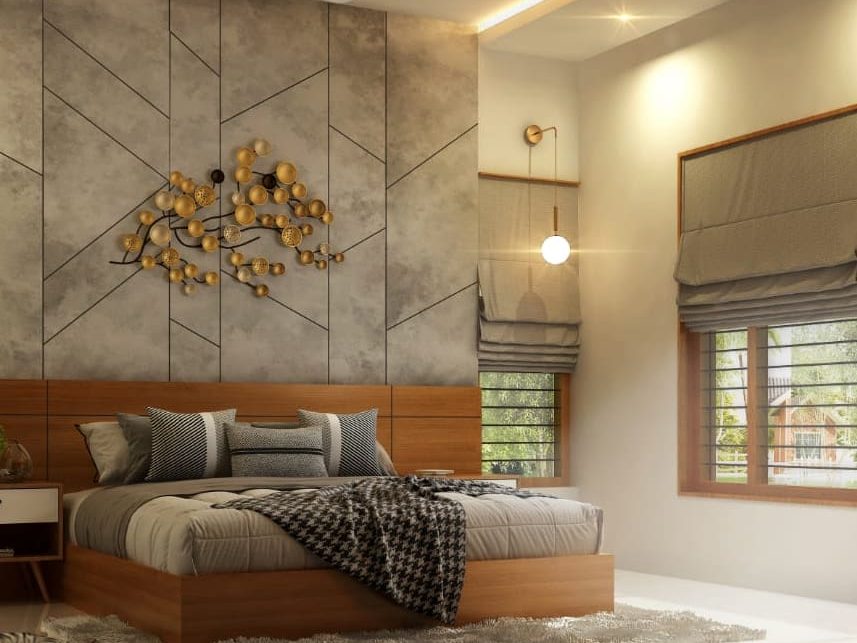
Kerala’s climate—with heavy monsoons, humidity, and intense sun—calls for wall textures that not only look beautiful but perform well over time. Below are a few texture trends gaining popularity in Kerala (and in India overall) in 2025, along with practical advice and style pointers.
1. Earthy / Natural Stone & Terracotta Textures
Why it’s trending
- Earth tones and natural palettes (terracotta, clay browns, muted greens) are major colour trends this year.
- Stone or rock finishes give a timeless, grounded look and blend well with Kerala’s lush surroundings.
How it works in Kerala
- Use real or faux laterite, sandstone, or tile cladding on accent walls or facades.
- For interiors, textured stone-stucco finishes or stone veneer panels can bring in that rugged, elegant feel.
- Seal properly to prevent water ingress and growth of moss/algae.
Design tip
Combine with smooth plastered walls. Let the stone texture be the accent wall, so it doesn’t overpower the space.
2. Stucco, Venetian, & Plaster Effects
Why it’s trending
- These finishes give a handcrafted, luxurious feel—often used in upscale homes and hotel interiors.
- They hide minor wall imperfections and add subtle depth.
How it works in Kerala
- Use modified cement or lime-based plaster mixes that allow breathability (so moisture can escape).
- For exteriors, finish with weatherproof coatings or protective topcoats.
- Interior walls can be finished in Venetian polish or “micro-cement” style finishes for a refined look.
Design tip
Use gentle tones, off-whites, or muted pastels. Avoid overly glossy finishes, as they may accentuate flaws or glare under strong sunlight.
3. Metallic / Pearl / Drybrush Accent Textures
Why it’s trending
- Metallic and pearlescent textures introduce a subtle shimmer that responds to changing light — giving walls dynamic character.
- Drybrushing techniques (dragging a brush over a base coat) add delicate texture without heavy material use.
How it works in Kerala
- Use metallic effect only on one feature wall in living rooms, lobbies, or dining areas.
- Keep it away from high-moisture zones unless properly sealed.
- Match with soft ambient lighting to highlight texture nuances.
Design tip
Pair these textures with neutral or earthy base colours so the metallic effect doesn’t become too loud.
4. Vertical & Linear Drag / Stria Textures
Why it’s trending
- These techniques create vertical lines or striations, giving walls a sense of height and drama.
- They are modern yet understated.
How it works in Kerala
- Use in corridors, entrance lobbies, or feature columns.
- For exteriors, vertical drag textures help water run off better.
- Try subtle contrasts (slightly lighter/darker shades) to emphasize the lines.
Design tip
Maintain consistency—don’t mix too many linear textures in one elevation; let one wall be the hero.
5. Soft Linen, Fabric, & Textile-Impression Textures
Why it’s trending
- Textures that mimic the feel or look of fabrics (linen, canvas) are gaining popularity for adding warmth and tactility without fabric itself.
- They offer a cozy, soft aesthetic.
How it works in Kerala
- Best suited for interiors—bedrooms, study rooms, lounges.
- Choose breathable texture coatings to avoid trapping humidity.
- Use pastel or muted tones to maintain serenity.
Design tip
Accent one wall with fabric-look texture and keep others smooth to balance softness with clarity.
Tips for Making These Textures Work in Kerala’s Climate
- Moisture Control & Waterproofing
- Use water-repellent additives, quality sealers, and waterproof topcoats, especially for exteriors.
- Ensure proper drainage, overhangs, and eaves so textures aren’t exposed to constant splash.
- Quality Substrate & Surface Prep
- The base wall must be properly cured, smooth, and crack-free; uneven or damp walls will ruin texture finishes.
- Use acrylic-based primers or bonding agents.
- Choose Durable Materials
- Use UV-resistant, alkali-resistant coatings for finishes exposed to sun.
- Opt for textures that can be washed or cleaned without damaging the finish.
- Test a Sample Patch First
- Before committing to the full area, do a small test wall (6×6 ft) to observe how the texture weathers under local sunlight / rain.
- Limit Overuse
- Use textured walls as accents rather than covering every wall. Too many textures in one space can feel chaotic.
- Lighting Matters
- Use lateral lighting (spot, wall wash lights) to accentuate the texture’s relief and shadows.
Leave a Reply